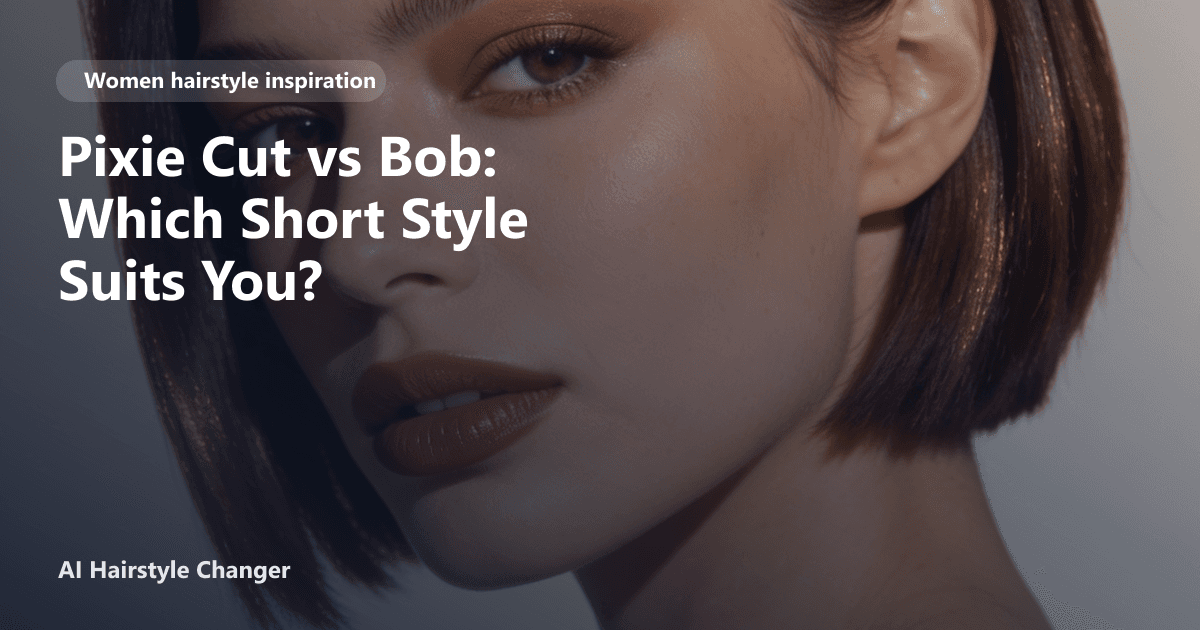
Thinking about going short but torn between a pixie cut and a bob? This decision can feel huge - especially if you're picturing a dramatic change. The right short style can transform your look, boost confidence, and even simplify your routine. But the wrong choice can lead to months of regret. Here's how to compare pixie cuts and bobs, see which fits your features and lifestyle, and how to preview both styles with more clarity before you book your salon appointment.
The Big Decision: Pixie Cut or Bob?
Most women considering a major chop are weighing two iconic options: the pixie cut and the bob. Both offer a fresh, bold vibe, but their differences matter. Pixie cuts are ultra-short, edgy, and often highlight cheekbones and eyes. Bobs are versatile, ranging from chin-length to just above the shoulders, and can be sleek, layered, or textured.
The best choice depends on your face shape, hair texture, styling preferences, and how much maintenance you're willing to handle. Let's break down what sets these cuts apart and how to decide which one will work for you.
Pixie Cut: Who It Flatters and When It Shines
A pixie cut is a cropped style, usually short at the back and sides with slightly longer layers on top. It's a bold move that puts your features front and center. Pixies work especially well for:
- Oval and heart-shaped faces: The cut opens up your face and highlights bone structure.
- Women with fine or thinning hair: A well-layered pixie can create the illusion of volume. See more in Pixie Cut for Thin Hair.
- Low-maintenance seekers: Daily styling is minimal, though regular trims are essential.
Popular Pixie Directions
- Textured Pixie: Choppy layers, often styled with a bit of wax or pomade, give movement and a modern edge. Ask your stylist for razored ends and piecey texture.
- Tapered Pixie: Shorter at the nape and sides, longer on top. This style flatters round faces by adding height and elongation. For Black women, a Tapered Pixie Cut for Black Hair can be customized for natural texture.
- Pixie with Side-Swept Fringe: Softens strong jawlines or broad foreheads. Ask for longer bangs that can be swept to the side.
- Classic Crop: Sleek and uniform, with minimal layers. Best for straight hair and angular features.
What to Ask For at the Salon
- Desired length at the crown and sides
- Layering for volume or smoothness
- Fringe direction (side, forward, or none)
- Tapered or blunt nape
- Maintenance schedule (trims every 4-6 weeks)
When Pixies Don't Work
Pixie cuts can be challenging for very curly hair unless you want a sculpted, close-cropped look. If you love ponytails or frequent updos, a pixie may feel limiting. Be honest with your stylist about your styling habits.
Bob Haircut: Versatility and Who Should Choose It
Bobs are the chameleons of short haircuts. Ranging from jaw to collarbone, they can be blunt, layered, angled, or textured. Bobs suit a wide range of face shapes and hair types, making them a safe but stylish choice.
- Round faces: A long bob (lob) that grazes the collarbone slims and elongates.
- Square or angular faces: Soft, layered bobs with movement break up strong lines.
- Fine or thin hair: A blunt bob adds density. See Best Bob Haircuts for Fine or Thin Hair for inspiration.
Bob Variations to Consider
- Classic Blunt Bob: Chin-length, all one length, sharp and sophisticated. Works best with straight hair.
- Layered Bob: Adds movement and volume, great for wavy or thick hair.
- Textured or Shaggy Bob: Messy layers, tousled finish, low-fuss styling.
- A-Line Bob: Shorter in the back, longer in the front. Flatters round or heart-shaped faces by framing the jawline.
What to Ask For at the Salon
- Precise length (chin, jaw, or collarbone)
- Layering for volume or sleekness
- Blunt or textured ends
- Fringe options (curtain, blunt, or side-swept)
- Maintenance needs (bobs grow out gracefully but may need shaping every 6-8 weeks)
When Bobs Miss the Mark
Super-short bobs can accentuate a strong jaw or wide cheeks if not carefully shaped. Very curly hair may require special layering to avoid a pyramid effect. For a full breakdown, check the Bob Haircut Guide: Types, Face Shapes, and Maintenance.
Pixie vs Bob: Key Differences at a Glance
| Feature | Pixie Cut | Bob Haircut |
|---|---|---|
| Length | Very short (ear to nape) | Chin to collarbone |
| Styling Time | Minimal | Moderate |
| Updo Options | Limited | Some (short ponytails) |
| Face Shapes | Oval, heart, angular | Most, especially round |
| Maintenance | Frequent trims (4-6 wks) | Less frequent (6-8 wks) |
| Styling Products | Wax, pomade, light spray | Creams, mousse, texturizer |
How to Choose: Face Shape, Hair Type, and Lifestyle
Choosing between a pixie and a bob is about more than just length. Consider:
- Face Shape: Use a style that balances your proportions. For a deep dive, visit the Pixie Cut Guide: Best Pixie Styles by Face Shape and Hair Type.
- Hair Texture: Fine hair benefits from blunt edges or choppy layers. Thick hair may need thinning or texturizing.
- Styling Routine: If you want to wash and go, a pixie may be easiest. If you like to switch up your look, a bob offers more variety.
- Lifestyle: Consider your job, activities, and how often you want to visit the salon.
Real-Life Try-On: See Yourself Before You Commit
It's tough to visualize how a dramatic cut will look on your own face. That's where the AI Hairstyle Changer comes in. Upload your selfie, try on dozens of pixie and bob variations, and compare side-by-side results. You can tweak length, fringe, and texture, then save your favorites to show your stylist. This takes the guesswork out of the decision and helps you avoid haircut regret.
AI Hairstyle Changer is especially helpful if you're debating between a bold pixie and a softer bob. Try both, see how they fit your features, and get a realistic preview before making the cut.
Maintenance and Upkeep: What to Expect
- Pixie Cut: Needs trims every 4-6 weeks to keep its shape. Styling is quick - usually just a dab of product and a tousle. Bedhead can be an issue, so expect to wet and restyle most mornings.
- Bob Haircut: Slightly less frequent trims (6-8 weeks), especially for layered or textured bobs. Blunt bobs need more precise upkeep. Styling can be as simple as a blow-dry or air-dry with texturizer, but curling or straightening adds time.
Ask your stylist about the best products for your hair type and how to maintain your cut between appointments.
When to Go Pixie, When to Go Bob
Choose a pixie cut if you want a bold change, love low-maintenance mornings, or want to highlight your features. Go for a bob if you want versatility, the option for subtle updos, or a style that flatters almost any face shape. If you're still unsure, use AI Hairstyle Changer to try on both and see which makes you feel most confident.
FAQ
Will a pixie cut make my face look rounder?
A well-cut pixie can actually elongate the face, especially with volume at the crown and side-swept bangs. Your stylist can tailor the shape to avoid a round effect.
Can I pull off a bob with very fine hair?
Yes! Blunt or slightly layered bobs can create the illusion of thickness. For more details, visit Best Bob Haircuts for Fine or Thin Hair.
How do I show my stylist exactly what I want?
Bring clear reference photos. With AI Hairstyle Changer, you can save your try-on results and show your stylist the precise cut, length, and texture you want.
How long does it take to grow out a pixie or bob?
Growing out a pixie to a bob takes about 6-12 months, depending on your hair growth. Bobs grow out more gracefully, but regular trims will keep the shape fresh.
Takeaway: Try Before You Cut
Choosing between a pixie cut and a bob is a big decision, but you don't have to guess. Use AI Hairstyle Changer to preview both styles, shortlist your favorites, and walk into your salon appointment with confidence. Ready to see yourself in a new short style? Head to AI Hairstyle Changer: Try New Looks Before You Cut and find your perfect match.