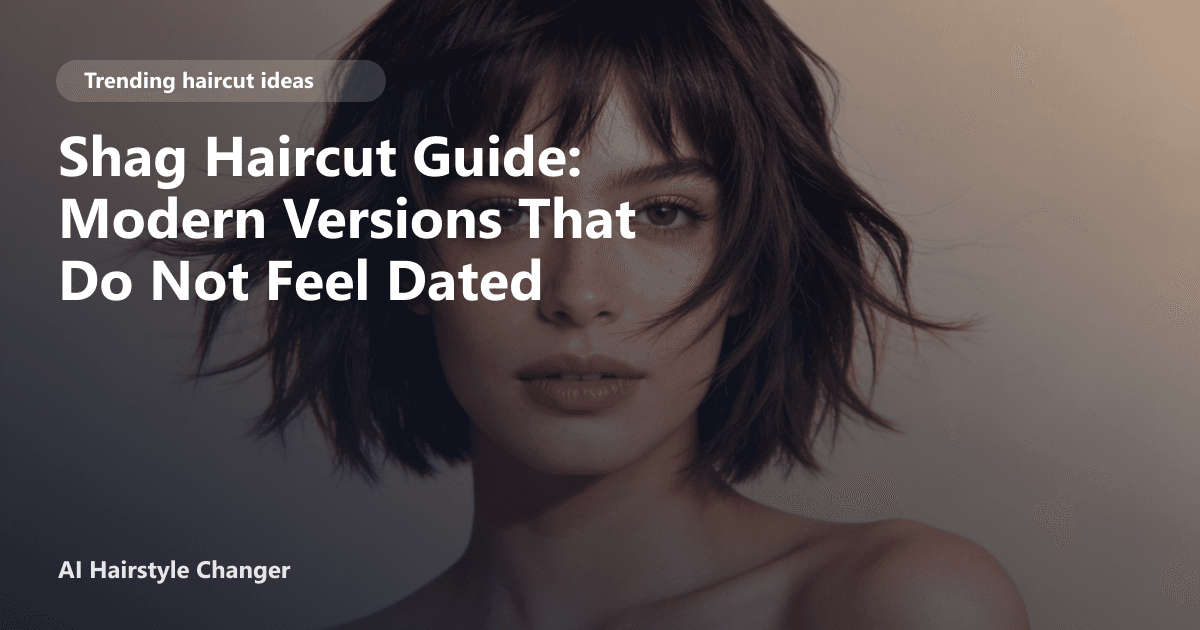
If you're staring at your reflection, debating whether a shag haircut will look edgy or just outdated, you're not alone. The classic shag has evolved well beyond its retro roots, and today's versions are designed to flatter a range of face shapes, hair types, and personal styles. But with so many modern takes - from butterfly and wolf cuts to hybrid layers - it's tough to know which direction to choose, or how to communicate your vision at the salon. Here's how to navigate the new shag family, with real examples, practical tips, and a smarter way to preview your next look before you commit.
Why the Shag Is Back - and Not Just for the Retro Crowd
The original shag haircut, all choppy layers and feathered volume, first made waves in the 1970s. But the resurgence isn't about nostalgia - it's about movement, texture, and low-fuss styling. Modern shags are less uniform, more tailored, and often blend elements from trending cuts like the wolf and butterfly. The result: hair that looks intentionally tousled, frames the face, and feels current, not costume.
If you're drawn to the idea of a wash-and-go style with built-in personality, the new shag family delivers. And thanks to AI Hairstyle Changer, you can experiment with multiple shag-inspired looks on your own selfie, narrowing down options before you show your stylist.
The Modern Shag: Key Features and Who It Flatters
Today's shag is defined by its layered structure, but the details matter. Most modern shags feature:
- Multiple lengths of layering for movement
- Face-framing pieces that soften strong jawlines or highlight cheekbones
- Bangs - curtain, wispy, or full - integrated into the cut
- Volume concentrated at the crown or evenly distributed
Who does it suit?
- Oval and heart-shaped faces benefit from the softening effect
- Fine hair gains texture and the illusion of fullness
- Wavy or curly hair types can embrace natural movement, avoiding triangle shapes with strategic layering
- Straight hair gets a boost of interest and body
If you're worried about looking too retro, ask for softer, blended layers and modern fringe shapes. Use AI Hairstyle Changer to preview subtle vs. bold shag options on your own face.
Shag Direction #1: The Butterfly Cut
The butterfly cut is a fresh take on the shag, combining long, flowing layers with shorter face-framing pieces that mimic the wings of a butterfly. Unlike the classic shag, which can be heavily layered all over, the butterfly cut keeps length at the bottom for a softer, more wearable silhouette.
Who it suits:
- Medium to long hair lengths
- Those seeking movement without sacrificing length
- Anyone wanting to grow out curtain bangs or experiment with layers gradually
Salon tips:
- Ask for long layers starting around the chin, with shorter pieces framing the face
- Specify how much length you want to keep at the back
- Request curtain or bottleneck bangs for a seamless blend
Maintenance:
- Regular trims every 8 - 10 weeks to keep layers fresh
- Styling with a round brush or air-drying with a wave spray
Want to see if the butterfly cut suits you? Try it virtually with AI Hairstyle Changer before your next appointment.
Shag Direction #2: The Wolf Cut
A hybrid between the shag and the mullet, the wolf cut is all about volume at the crown, choppy layers, and a slightly rebellious edge. It's a favorite among Gen Z for its bold, undone vibe, but it can be customized for any age or hair texture.
Who it suits:
- Those with medium to thick hair
- Wavy or curly hair types that want to enhance natural texture
- Anyone looking for a statement style
Salon tips:
- Ask for heavy, textured layers with shorter pieces at the top and longer, wispy ends
- Consider adding micro or curtain bangs for extra attitude
- Specify how dramatic you want the mullet effect at the back
Maintenance:
- Expect more frequent trims if you want to maintain the shape
- Works well with air-drying or diffusing for natural movement
For more wolf cut inspiration, see the Wolf Cut Guide: Who It Suits and How to Style It, or explore Best Wolf Cut Ideas for Long Hair and Wolf Cut for Curly Hair: Layers Without Losing Shape.
Shag Direction #3: The Soft Shag with Curtain Bangs
If you love the idea of a shag but want a subtler, more universally flattering version, the soft shag with curtain bangs is a top pick. This style features gentle, blended layers and long, parted bangs that sweep to either side, creating a face-framing effect without harsh lines.
Who it suits:
- Almost any face shape, especially round or square
- Straight, fine, or slightly wavy hair
- Those who want a low-maintenance, everyday look
Salon tips:
- Request soft, seamless layers that start below the cheekbones
- Ask for curtain bangs that blend into the side layers
- Avoid overly choppy or disconnected layers for a more modern feel
Maintenance:
- Easy to style with a blow dryer or air-dry
- Bangs may need a trim every 4 - 6 weeks
Preview how curtain bangs and soft layers work with your features using AI Hairstyle Changer before committing.
Shag Direction #4: The Short Shag
Short hair doesn't mean you have to skip the shag trend. The short shag brings texture and movement to bobs or lobs, with layers that add volume and prevent a boxy shape. This is a great option if you want something playful but still easy to manage.
Who it suits:
- Short to medium hair lengths
- Fine or straight hair that needs a lift
- Anyone looking to grow out a pixie or add edge to a classic bob
Salon tips:
- Ask for piecey, textured layers throughout
- Consider adding a micro fringe or soft side bangs
- Specify the balance of volume at the crown vs. the ends
Maintenance:
- Styling wax or texture spray helps define layers
- Trims every 6 - 8 weeks keep the shape sharp
What to Tell Your Stylist: Shag Haircut Conversation Starters
Walking into the salon with a clear vision is key. Bring reference photos (your AI Hairstyle Changer shortlist is perfect for this), and be specific about:
- The length you want to keep (shoulders, collarbone, or longer)
- Where you want the shortest layers to start (cheekbone, chin, or jawline)
- The type of bangs you prefer (curtain, bottleneck, blunt, or none)
- How much volume you want at the crown vs. the ends
- How much daily styling you're willing to do
Avoid vague requests like "just a shag." Instead, mention the specific variation and show your try-on results for clarity.
Shag Haircut Maintenance: Upkeep and Styling Tips
While shags are known for their effortless vibe, a little maintenance goes a long way. Here's what to expect:
- Trims: Layered cuts need regular trims to prevent split ends and maintain shape. Plan on every 6 - 10 weeks, depending on your style.
- Styling: Most shags look best with minimal heat. Air-drying, using a diffuser, or scrunching with mousse or wave spray enhances texture.
- Products: Lightweight creams, salt sprays, and dry shampoo keep layers fresh and tousled.
- Avoid: Heavy oils or creams that weigh down layers, or over-straightening which can flatten the shape.
When the Shag Fails: Common Pitfalls and How to Avoid Them
No cut is one-size-fits-all. Here's when the shag can go wrong:
- Too much layering on fine hair can make ends look stringy
- Not enough face-framing leaves the look unfinished
- Overly aggressive bangs can dominate small faces
- Ignoring natural texture leads to daily styling frustration
Previewing different shag variations with AI Hairstyle Changer helps you spot these issues before you commit. Bring your favorite virtual looks to your stylist for a safer, more satisfying result.
FAQ
How do I know which shag variation suits my face shape?
Try on different shag styles virtually using AI Hairstyle Changer. Focus on where the layers and bangs fall in relation to your cheekbones and jawline. For more guidance, see our Best Hairstyles for Your Face Shape resource.
Can I get a shag if I have curly or textured hair?
Absolutely. Shags work well on curls and waves, especially with customized layering. Check out Wolf Cut for Curly Hair: Layers Without Losing Shape for curly-specific tips.
What's the difference between a wolf cut, butterfly cut, and shag?
The wolf cut is a choppy, high-volume hybrid of the shag and mullet. The butterfly cut features long, soft layers with face-framing wings. The shag is the umbrella style, with variations in length, layering, and bangs. Each can be tailored to your hair type and preference.
How do I avoid looking dated with a shag haircut?
Opt for blended, seamless layers and modern fringe shapes. Avoid harsh, disconnected lines or overly heavy bangs. Previewing styles with AI Hairstyle Changer helps you visualize a fresh take before you cut.
Takeaway: Preview Your Shag Before You Commit
The modern shag family offers endless ways to add texture, movement, and personality to your hair - without feeling stuck in the past. Whether you're drawn to the butterfly, wolf, or a soft layered shag, use AI Hairstyle Changer to test-drive your favorites, fine-tune your vision, and walk into your next appointment with confidence. Ready to see yourself in a modern shag? Start your virtual try-on at AI Hairstyle Changer.