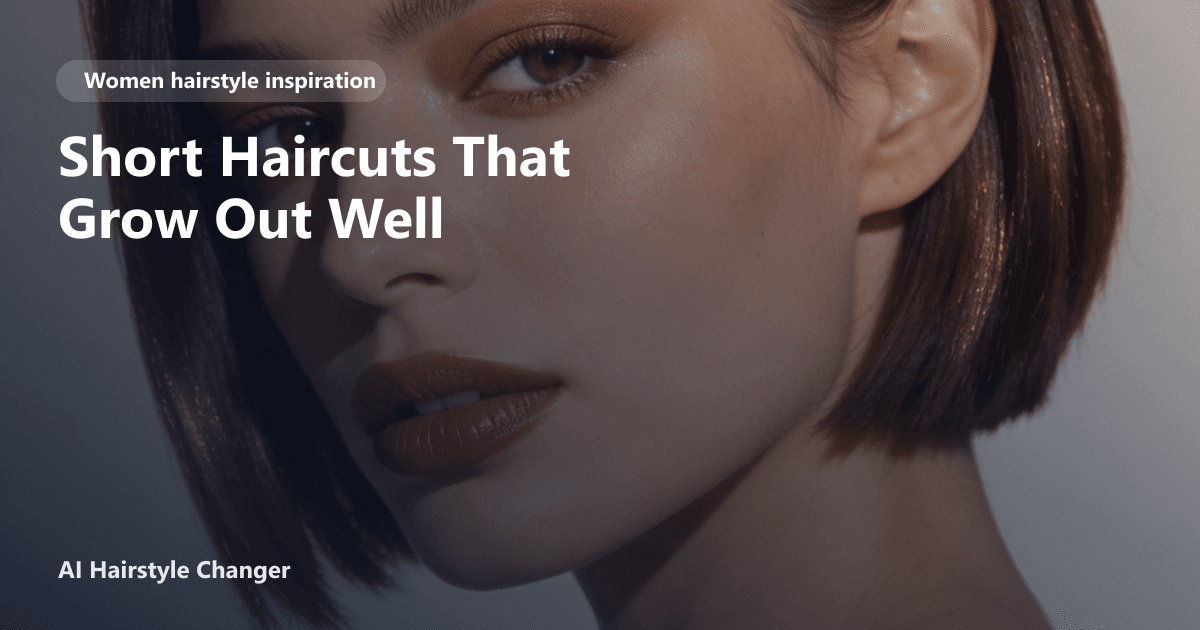
Choosing a short haircut is a big decision - especially if you're worried about the awkward grow-out phase. Maybe you're ready for a fresh pixie or a chic cropped style, but the thought of months of in-between hair is holding you back. The good news: Not all short cuts are high-maintenance or destined for tricky transitions. Some short haircuts are designed to grow out beautifully, giving you soft lines and wearable shapes at every stage.
This guide breaks down the best short cuts that grow out well, who they suit, and how to talk to your stylist about the details that matter. You'll also learn how AI Hairstyle Changer can help you preview and compare styles before you commit - so you can skip haircut regret and enjoy every phase of your new look.
Why Some Short Haircuts Grow Out Better Than Others
The secret to a graceful grow-out isn't just about length. It's about shape, layering, and how your stylist personalizes the cut for your hair type and face shape. Cuts with soft edges, blended layers, and flexible partings tend to transition more smoothly. Sharp lines or dramatic undercuts can look edgy at first, but may require more frequent trims to avoid awkward lengths.
When planning your short cut, consider:
- Layering: Soft, blended layers allow your hair to fall naturally as it grows, avoiding harsh steps or heavy corners.
- Fringe direction: Side-swept bangs or longer fringes can be tucked or blended as they grow, while blunt micro-bangs may look uneven quickly.
- Volume placement: Volume at the crown or soft stacking at the back can keep your silhouette flattering as your hair lengthens.
- Maintenance: Some cuts need trims every 4-6 weeks, while others look intentional for months.
Previewing these details with AI Hairstyle Changer can help you see how each style will evolve on your features.
The Textured Pixie: Effortless at Every Stage
A textured pixie is one of the most forgiving short cuts for grow-out. It features choppy layers, soft edges, and a bit of length left on top. As your hair grows, the layers blend into a tousled crop or even a short bob, without harsh lines.
Who it suits: Most face shapes, especially oval, heart, and round. Works well for straight, wavy, or fine hair types. If you have thin hair, check out the dedicated Pixie Cut for Thin Hair guide for extra tips.
Salon tips: Ask for point-cutting on the ends and textured layers throughout. Request a longer fringe if you want more styling options as it grows.
Maintenance: Plan for trims every 6-8 weeks, but the shape remains soft and wearable even if you skip a cut.
When it fails: If you prefer a blunt, geometric look, a textured pixie may feel too undone. Very thick or curly hair may need extra thinning for manageability.
The Tapered Pixie: Sleek Lines, Easy Transition
The tapered pixie is cut close at the nape and sides, with gradual length toward the crown and fringe. This shape hugs the head and creates a clean silhouette, but the tapering means the grow-out is less blocky and more controlled.
Who it suits: Great for oval, square, and heart-shaped faces. Especially flattering on Black hair textures - see the Tapered Pixie Cut for Black Hair for tailored advice.
Salon tips: Ask for a soft taper at the neckline and ears, with enough length on top for volume or curl definition. Specify if you want to keep the sides tight or allow them to grow for a softer look.
Maintenance: Trims every 4-6 weeks keep the shape sharp, but the tapered edges grow out into a soft crop rather than a mullet.
When it fails: Super-straight hair may show uneven growth more quickly. If you want to avoid regular salon visits, request a slightly longer taper for more flexibility.
The Grown-Out Crop: From Pixie to Bob
Some short cuts are designed with the future in mind. A grown-out crop starts as a longer pixie or very short bob, with layers that encourage a natural transition to a classic bob shape. This is ideal if you want a short style now, but plan to grow your hair out over the next year.
Who it suits: Almost everyone, but especially those with fine to medium hair and anyone nervous about the commitment of a super-short style.
Salon tips: Ask for a soft nape, subtle stacking at the back, and longer pieces at the front. A side part or sweeping fringe gives you styling flexibility as your hair lengthens.
Maintenance: Trims every 8-12 weeks help keep the shape, but you can stretch appointments as the cut morphs into a bob. For more on bob transitions, see the Bob Haircut Guide: Types, Face Shapes, and Maintenance.
When it fails: If your hair is very thick or curly, be sure your stylist debulks the layers so the shape doesn't become too triangular as it grows.
The Layered Short Bob: Classic and Adaptable
A short bob with soft, blended layers is one of the most versatile cuts for growing out. The layers add movement and prevent the dreaded "bell" shape as your hair gets longer. A bob can be customized for your face shape, hair texture, and personal style.
Who it suits: Works for straight, wavy, and fine hair. For those with thin hair, check out Best Bob Haircuts for Fine or Thin Hair for specific recommendations.
Salon tips: Ask for layers that start at the cheekbones or jawline, with a slightly longer front. A soft, side-swept fringe can be grown out or tucked behind the ear.
Maintenance: Trims every 8-10 weeks keep the ends healthy, but the shape remains flattering even as it grows into a medium-length bob.
When it fails: Very thick or curly hair may need extra thinning or shaping to avoid bulk. Avoid blunt, heavy lines if you want a low-maintenance grow-out.
How to Talk to Your Stylist About Grow-Out
Before you go short, have a detailed conversation with your stylist about your hair goals and lifestyle. Bring photos of the grow-out stages you like, not just the initial cut. Use AI Hairstyle Changer to create a shortlist of styles you've tried virtually - this gives your stylist a clear reference for both the cut and the transition you want.
Key points to discuss:
- How often you're willing to come in for trims
- Whether you want to avoid awkward stages or don't mind experimenting
- If you prefer to keep some length around the face for styling flexibility
- How your hair texture might affect the grow-out
A great stylist will help you customize the cut for an easier transition and suggest products or styling tricks for each phase.
Try-On Tools: Preview Your Grow-Out Before You Cut
AI Hairstyle Changer lets you upload your selfie and preview a wide range of short cuts, from edgy pixies to soft crops and layered bobs. You can see how each style frames your face and how it might look as it grows out - no guesswork, no regrets.
Use the tool to:
- Compare different pixie and short bob variations side by side
- Experiment with fringe direction, parting, and volume placement
- Save your favorites to show your stylist at your appointment
Trying on styles virtually helps you feel confident in your decision and ensures you pick a cut that fits your lifestyle and grow-out goals.
Maintenance Tips for a Smooth Grow-Out
Even the most forgiving short cuts benefit from a little TLC as they grow. Here's how to keep your style looking intentional at every length:
- Use lightweight styling products for texture and movement
- Try headbands, clips, or scarves to manage awkward stages
- Book a "dusting" trim to clean up ends without losing length
- Switch up your part or add soft waves for variety
Your stylist can recommend personalized tricks based on your cut. Previewing these looks with AI Hairstyle Changer can inspire new ways to style your hair as it transitions.
Explore More Short Hair Inspiration
If you're still deciding between pixie, crop, or bob, check out these deep dives:
- Pixie Cut Guide: Best Pixie Styles by Face Shape and Hair Type
- Pixie Cut for Thin Hair
- Tapered Pixie Cut for Black Hair
- Bob Haircut Guide: Types, Face Shapes, and Maintenance
- Best Bob Haircuts for Fine or Thin Hair
These guides cover everything from face shape matching to low-maintenance styling.
FAQ
How do I avoid awkward stages when growing out a pixie cut?
Choose a cut with soft, blended layers and a longer fringe. Regular trims to reshape the nape and sides help, but using styling products and accessories can also smooth the transition. Previewing grow-out stages with AI Hairstyle Changer helps you plan ahead.
What's the easiest short cut to grow out?
A textured pixie or layered short bob usually grows out most gracefully. These shapes avoid harsh lines and naturally blend into longer styles with minimal upkeep.
Can I go from a pixie to a bob without an awkward phase?
Yes, if your initial cut is designed with the transition in mind. Ask your stylist for a grown-out crop with longer front pieces and soft stacking at the back. See the Bob Haircut Guide: Types, Face Shapes, and Maintenance for more tips.
Should I use AI Hairstyle Changer before my salon visit?
Absolutely. Trying on different short cuts virtually lets you see how each style suits your face and how it might look as it grows. It's a smart way to avoid regret and communicate clearly with your stylist.
Ready to Try On Short Cuts Before You Cut?
Short hair doesn't have to mean high maintenance or awkward grow-out phases. With the right cut and a little planning, you can enjoy every stage of your style. Use AI Hairstyle Changer to preview, compare, and shortlist your favorite short cuts - so you can walk into your next salon visit with total confidence.