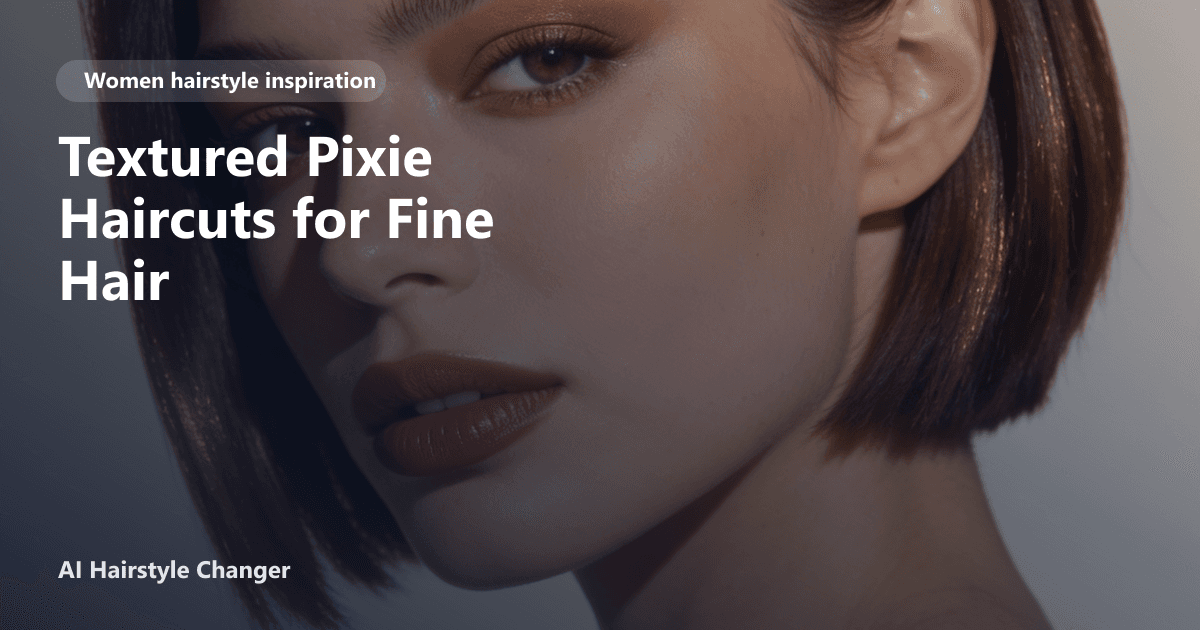
Thinking about chopping your fine hair into a textured pixie, but worried about limp results or post-cut regret? Many women want the volume, movement, and edge of a short style, but hesitate because fine hair can fall flat or look sparse in the wrong cut. The right pixie, however, can transform fine hair - making it look fuller, more dimensional, and easy to style. The challenge is knowing which textured pixie haircut will actually work for your hair type and face shape, and how to communicate your vision at the salon.
Why Textured Pixie Cuts Work for Fine Hair
Fine hair often struggles with volume and shape, especially when cut blunt or left too long. A textured pixie cut uses strategic layering, feathered ends, and sometimes a bit of undercutting to create the illusion of density and movement. This approach removes excess weight, encourages lift at the roots, and ensures the hair doesn't cling to the scalp.
Texture is the secret weapon for fine hair: it prevents the style from looking flat, adds interest, and makes day-to-day styling much easier. Modern pixie cuts for fine hair are all about tailored layers, piecey separation, and a little controlled messiness.
Four Flattering Textured Pixie Directions for Fine Hair
Not all pixies are created equal. Here are four distinct textured pixie variations that work especially well for fine hair, with tips for who they suit and what to ask for at the salon.
1. Choppy Layered Pixie
A choppy layered pixie is ideal for women who want maximum texture and a slightly undone look. The stylist uses point-cutting or razor techniques to create short, uneven layers throughout the crown and sides. This gives the illusion of thicker hair and adds playful movement.
- Who it suits: Most face shapes, especially oval and heart. Works well if you want a low-maintenance, tousled vibe.
- Salon ask: Request short, choppy layers, especially at the crown, and avoid heavy blunt lines. Ask for a light, piecey fringe for extra softness.
- Maintenance: Needs regular trims every 5-7 weeks to keep the texture fresh and prevent bulk at the nape.
- What to avoid: Over-thinning with texturizing shears, which can make fine hair look stringy.
2. Long Top Textured Pixie
If you're nervous about going super short, a longer top pixie offers versatility and a softer grow-out. The back and sides are cropped close, while the top is left longer and heavily layered for movement.
- Who it suits: Round and square faces, as the extra length on top elongates the face.
- Salon ask: Specify a longer top (2-4 inches) with lots of internal layering. Request a soft side-swept or curtain fringe for added volume at the front.
- Maintenance: Style with a lightweight mousse or texturizing spray to boost lift. Trims every 6-8 weeks.
- What to avoid: Too much length at the back, which can weigh the style down.
3. Tapered Nape Pixie
A tapered pixie features a close-cut nape and sides, with texture concentrated at the crown and fringe. This shape gives fine hair a modern, sculpted silhouette and keeps the style looking sharp between appointments.
- Who it suits: Heart and oval faces, or anyone wanting to highlight cheekbones and jawline.
- Salon ask: Ask for a tapered or faded nape, blended into textured crown layers. Consider a micro-fringe or wispy bangs for a bold statement.
- Maintenance: The nape grows out quickly, so plan for trims every 4-6 weeks.
- What to avoid: Heavy, straight-across bangs, which can look flat on fine hair.
4. Textured Pixie with Asymmetrical Fringe
Adding an asymmetrical fringe to a textured pixie creates instant interest and flatters fine hair by drawing attention to the eyes and cheekbones. The uneven fringe also helps disguise sparse areas at the hairline.
- Who it suits: Square and round faces, or anyone wanting to soften strong jawlines.
- Salon ask: Request a deep side part with an angled, choppy fringe. Keep the rest of the cut softly layered for movement.
- Maintenance: Fringe needs more frequent trims to keep its shape, but the rest can grow out gracefully.
- What to avoid: Uniform, helmet-like shapes; asymmetry is key here.
How to Talk to Your Stylist About Texture
Bringing reference photos is always helpful, but describing exactly what you want in a textured pixie can make all the difference. Here's what to discuss:
- Layering: Specify if you want short, choppy layers or a softer, blended effect. For fine hair, more layers at the crown boost volume.
- Fringe: Decide if you want a full, side-swept, micro, or asymmetrical fringe. Fringe direction and thickness can change the whole vibe.
- Volume placement: Tell your stylist where you want the most lift - usually at the crown or front for fine hair.
- Maintenance: Be honest about how often you want to come in for trims and how much time you'll spend styling.
- What to avoid: Over-texturizing, especially with thinning shears, can make fine hair look wispy. Ask for texture through layering, not just thinning.
For more tips on matching pixie styles to your features and hair type, check out the Pixie Cut Guide: Best Pixie Styles by Face Shape and Hair Type.
Styling and Upkeep: Keeping Your Pixie Fresh
Textured pixie cuts for fine hair are generally easy to style, but a few tricks can make a big difference:
- Products: Use lightweight volumizing mousse or texturizing spray. Avoid heavy waxes or creams that can weigh hair down.
- Drying: Blow-dry with your head upside down or use a diffuser for root lift.
- Tools: A small round brush or your fingers are usually enough to shape and separate layers.
- Refresh: Dry shampoo is great for adding texture and absorbing oils between washes.
Regular trims are essential to keep the shape crisp and prevent the style from becoming limp. If you're looking for more short hair inspiration, see the Pixie Cut for Thin Hair page for additional ideas.
When a Textured Pixie Isn't the Right Move
While textured pixie cuts are a game-changer for many with fine hair, they're not always the perfect fit. Consider these scenarios:
- Extremely fine or thinning hair: If your hair is very sparse at the crown or temples, even the best pixie might not provide enough coverage. In this case, a softly layered bob or a longer crop might be more flattering. The Best Bob Haircuts for Fine or Thin Hair page has plenty of options.
- Cowlicks or tricky growth patterns: Strong cowlicks at the front or crown can make certain pixie shapes hard to style. Talk to your stylist about how your hair grows and ask what adjustments are possible.
- Lifestyle: If you don't want to commit to trims every 4-6 weeks, consider a longer, layered short cut instead. The Bob Haircut Guide: Types, Face Shapes, and Maintenance covers lower-maintenance options.
Previewing Pixie Cuts With AI Hairstyle Changer
One of the biggest worries with a dramatic cut is not knowing how it will look on you. AI Hairstyle Changer solves this by letting you upload a selfie and try on dozens of textured pixie haircuts for fine hair - before you ever pick up the scissors. You can experiment with different lengths, fringe styles, and layering techniques, and even compare how each cut works with your face shape and hair density.
Shortlist your favorite looks to show your stylist, making the salon conversation easier and more productive. This virtual try-on experience helps you avoid regret and ensures you're excited about your new style. Whether you want to test a choppy pixie, a long top, or an asymmetrical fringe, AI Hairstyle Changer gives you the confidence to make a bold change.
More Short Cut Inspiration
If you're exploring other short styles, you might also be interested in:
- Tapered Pixie Cut for Black Hair: A variation with sharp, sculpted lines and plenty of texture.
- Pixie Cut Guide: Best Pixie Styles by Face Shape and Hair Type: Find the right pixie for your features and lifestyle.
- Best Bob Haircuts for Fine or Thin Hair: For those who want to keep a bit more length.
FAQ
How do I know if a textured pixie will suit my face shape?
A textured pixie cut can be customized for almost any face shape. For round faces, extra volume at the crown and a side-swept fringe help elongate. Square faces benefit from soft, choppy layers and asymmetrical fringes. Heart and oval faces can pull off most pixie variations. For more tailored advice, check out the Pixie Cut Guide: Best Pixie Styles by Face Shape and Hair Type.
What should I bring to my salon appointment?
Bring clear reference photos of the textured pixie cuts you like, and be ready to discuss your preferred length, layering, and fringe style. If you've used AI Hairstyle Changer, bring your favorite try-on images to help your stylist understand your vision.
How often do textured pixie cuts for fine hair need to be trimmed?
Most textured pixie cuts look best with trims every 4-7 weeks, depending on how fast your hair grows and how sharp you want the shape. Regular trims keep the texture fresh and prevent the style from losing volume.
Can I style a textured pixie cut without heat tools?
Absolutely. Most textured pixie cuts for fine hair are designed to air-dry well. Use a volumizing mousse or texturizing spray, scrunch with your fingers, and let your hair dry naturally for a tousled, effortless look.
Ready to See Yourself in a Textured Pixie?
Choosing a textured pixie cut for fine hair is a bold move - but with the right cut and a clear vision, it can transform your look and boost your confidence. Before you commit, try on different pixie variations with AI Hairstyle Changer and find the style that truly suits you. Start your transformation at AI Hairstyle Changer: Try New Looks Before You Cut.